
· by Michael Blair, Nashville's Remodeling
A Nashville house built before the war renovates differently from a 1990s house in almost every practical respect. When we take on a whole-home remodel of one, most of the planning goes into what the house is made of and what is hidden behind its walls, before anyone talks about finishes.
Nothing is standard
In the older houses we open up, stud spacing often varies, walls are seldom square, floors run out of level and ceiling heights can change from one room to the next. Stock cabinetry and standard door sizes usually need adjusting to fit, which is worth knowing before a kitchen or bath remodel is priced off a catalog.
That is not damage. It is how the house was framed and how it has settled over the decades, and we would rather design around it than spend the budget fighting it.
What are the walls of a pre-war house made of?
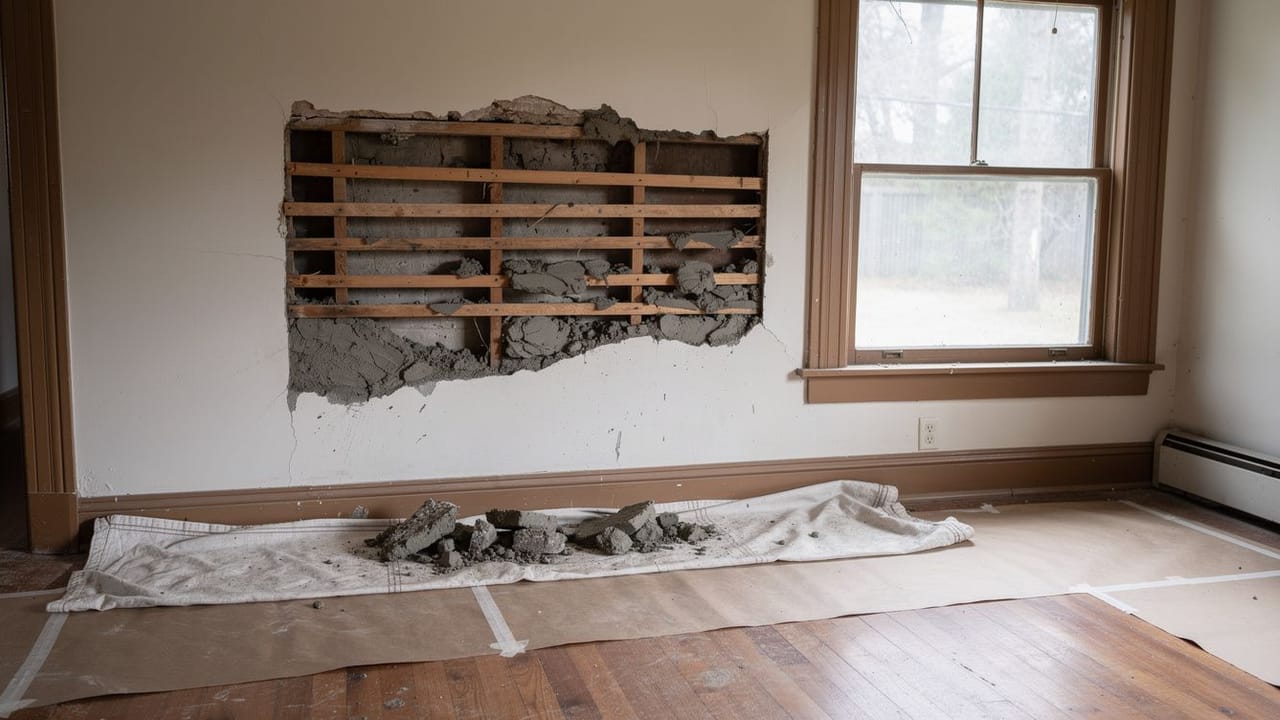
The walls are plaster rather than drywall, usually over wood lath. The National Park Service’s brief on repairing historic flat plaster describes the lath nailed straight across the studs and joists, and it credits plaster with resisting fire and reducing sound transmission. We cut into it with more care than drywall, and we plan where cabinets and shelving will be anchored before the first hole goes in.
Repairing it properly is its own skill. The same brief favors repairs made with wet plaster and traditional materials, while allowing that fine cracks can be filled with ordinary drywall joint compound. It also makes two points owners find reassuring: plaster is often less badly damaged than it first appears, and wood lath swells and shrinks with the humidity, which is why some hairline cracks reappear year after year.
- Walls out of square and floors out of level are common
- Plaster over lath, usually wood, rather than drywall
- We look for knob-and-tube wiring before a wall is opened
- We check what the supply pipes are made of
- Lead paint is a question in any house built before 1978; asbestos has no single cutoff year
Hazardous materials
Lead comes first in a house this age. The EPA’s Renovation, Repair and Painting Program page estimates that about three-quarters of U.S. homes built before 1978 still contain some lead-based paint, and contractors paid to disturb painted surfaces in those homes must be lead-safe certified, sole proprietors included. Asbestos follows no single date. The EPA’s asbestos overview lists vinyl floor tiles and their adhesives, hot water and steam pipes wrapped in asbestos insulation, textured paint on walls and ceilings, and roofing and siding shingles among the places it is found.
We test the materials a job will disturb before demolition, because stopping a job that is already open costs far more than a few samples, and a positive result usually changes how the work is done rather than whether it can be. For lead, the EPA’s guidance on reducing lead exposure at home points owners to a certified lead-based paint inspector or risk assessor. Our post on lead paint and asbestos in older Nashville homes goes further into what the testing involves.
Which original features are worth keeping?
Original wood floors, solid doors and trim profiles are worth saving where they are sound, because so much of the character of a pre-war house lives in them. Windows are where owners hesitate most. The Park Service’s brief on repairing historic wooden windows calls the windows of many historic buildings an important part of their architectural character, and its preservation office recommends keeping and repairing original windows whenever possible.
That brief dates from 1981 and its performance numbers come from a 1977 engineering handbook, so read them as a rough guide. It gives single-glazed wooden windows U-values of 0.88 to 0.99, says an added storm window should bring that down to 0.44 to 0.49, and puts a double-glazed metal window without a thermal break at about 0.6, where lower means less heat lost. It describes exterior storms as reversible and cost-effective and warns that interior ones need care to avoid condensation damage. If you are weighing restoration against replacement on your own house, ask us to come and look at the windows before you order anything.
Sources
- U.S. EPA, Renovation, Repair and Painting Program — About three-quarters of U.S. homes built before 1978 still contain some lead-based paint; paid work disturbing paint must be done by lead-safe certified firms, sole proprietorships included
- U.S. EPA, Reduce the Risk of Lead Exposure at Home — Homes built before 1978 are more likely to have lead-based paint; hire a certified lead-based paint inspector or risk assessor
- U.S. EPA, Learn About Asbestos — Asbestos in vinyl floor tiles and adhesives, pipe insulation, textured paint and patching compounds, roofing and siding shingles; exposure when disturbed or damaged
- National Park Service, Preservation Brief 21: Repairing Historic Flat Plaster — Wood lath nailed across studs and joists; plaster resists fire and reduces sound; wet-plaster repair, joint compound for fine cracks; often less damaged than it appears; lath moves with humidity; veneer plaster only slightly more than drywall
- National Park Service, Preservation Brief 9: The Repair of Historic Wooden Windows (1981) — Windows as architectural character; retain and repair whenever possible; storm window U-values from ASHRAE 1977; exterior storms reversible and cost-effective; interior storm condensation; repair cost effective when parts replacement is low
FAQ
What to Expect Renovating a Pre-War House — questions
Should I replace plaster with drywall?
Not by default. The National Park Service notes that plaster resists fire, reduces sound transmission and is often less damaged than it first looks, and that while full replastering is expensive, a veneer plaster system costs only slightly more than drywall. New drywall rarely matches the thickness of the old wall where it meets door and window trim, so we plan for that. Where large areas have failed, drywall is a reasonable answer for those areas.
Do I need to test for asbestos and lead?
In a house built before 1978, test for lead before anything painted is sanded, cut or torn out: the EPA estimates about three in four U.S. homes from before that year still contain some lead-based paint, and contractors paid to disturb it must be lead-safe certified. Asbestos has no single cutoff year, and the EPA says the risk comes when the material is disturbed or damaged, so we have suspect floor tile, pipe insulation and textured ceilings checked before demolition. Knowing beforehand is far less disruptive than finding out mid-project.
Are original windows worth restoring?
Often, yes. The National Park Service recommends keeping and repairing original windows whenever possible, and its window brief says repair can be cost effective when only a small share of each window’s parts needs replacing. With an exterior storm window added, its figures put a single-glazed wood window at a lower U-value than a double-glazed metal window without a thermal break, though those figures date from the late 1970s.
Where do you start when renovating a house?
With what the house is made of and what is behind its walls, before finishes. In a pre-war house we look for knob-and-tube wiring, check what the supply pipes are made of, and test the materials the job will disturb for lead and asbestos, because stopping a job that is already open costs far more than a few samples.