
· by Michael Blair, Nashville's Remodeling
It usually comes up late. A house is under contract, or about to be listed, and someone asks whether the basement bedroom, the enclosed back porch or the bathroom where a closet used to be ever had a permit. Sometimes the current owner did the work years ago; more often a previous owner did, and nobody knows. The question is less whether the house can be sold than what the paperwork says, what a buyer’s lender will see, and what it takes to bring the work into the record. We handle that last part as remodelers, through our whole-home remodeling work and smaller jobs alike, so this post covers the forms, the appraisal rule and the Metro records, and leaves the legal side to the people who answer it.
Can you sell a house with unpermitted work in Tennessee?
Yes, but the state’s disclosure form puts the question in front of you. Tennessee Public Chapter 727 (2018), which amended the statute behind the residential property condition disclosure, sets out a form that asks whether there have been room additions, structural modifications or other alterations or repairs made without necessary permits, and a second item asking whether any were done out of compliance with building codes. Each can be answered yes, no or unknown. The form calls itself the seller’s disclosure of the property’s condition, not a warranty, and not a stand-in for the inspections a buyer may want.
That 2018 act also lets the parties use a different form as long as it covers all the same items, and the form says any sales agreement between buyer and seller overrides it on who repairs what. So the contract, not the form, usually decides what happens next. Whether a particular house needs a yes, and what a buyer can do about the answer, is a question for a real estate attorney or your agent. Our part starts once you know what work is in question and want it brought into the record.
Will an appraiser report unpermitted work?
On a Fannie Mae loan, an appraiser who finds an addition without a required permit has to say so. The Fannie Mae Selling Guide, B4-1.3-05, requires the appraiser to describe how well that work was done and how it looks, and to say whether it changes what the property is worth. The guide does not say the loan is refused. It says the work gets described and weighed, which means a buyer’s lender may see it in the report even if the listing never mentioned it.
In practice that turns a quiet question into a written one. An attic room with a low ceiling and no permit, or a garage that became a den, is the kind of space an appraiser can notice by walking through. If the work was done well, the comment may say so. If it shows its age, its shortcuts or a layout the code would not allow, that shows up too. Our post on converting a garage into living space covers what a permitted version of that conversion has to meet.
How do I find out what was permitted?
In Davidson County, look the parcel up in Metro’s own records. The Davidson County Property Permit History page from Metro Codes points to the Parcel Viewer map, where you search by address, owner or map and parcel number, choose Permit History, and click a permit number to open its scanned documents in ePAV. That shows which jobs were filed, by whom and for what. What it cannot show is work nobody filed, so we compare the record against the house itself: the rooms, the panel, the plumbing runs and anything that looks newer than the permits say it should.
Knowing which work needed a permit narrows the search. Metro’s guide to renovating a single-family residence lists what does and does not need one in a one- or two-family house. Outside Davidson County, the county or city has its own permit office; our city pages, such as Franklin, name the office for that town.
- Permit needed: replacing a structural element such as a joist, rafter or stud; a new or relocated door; drywall work over 100 square feet; a new or relocated ceiling; a change in window area
- Trade permit needed: relocating a plumbing fixture, or an electrical fixture, switch or outlet
- No permit: cabinet replacement with no plumbing or electrical changes, door replacement in the same opening, window glass replacement, flooring, interior paint, insulation
Getting the work opened, inspected and permitted
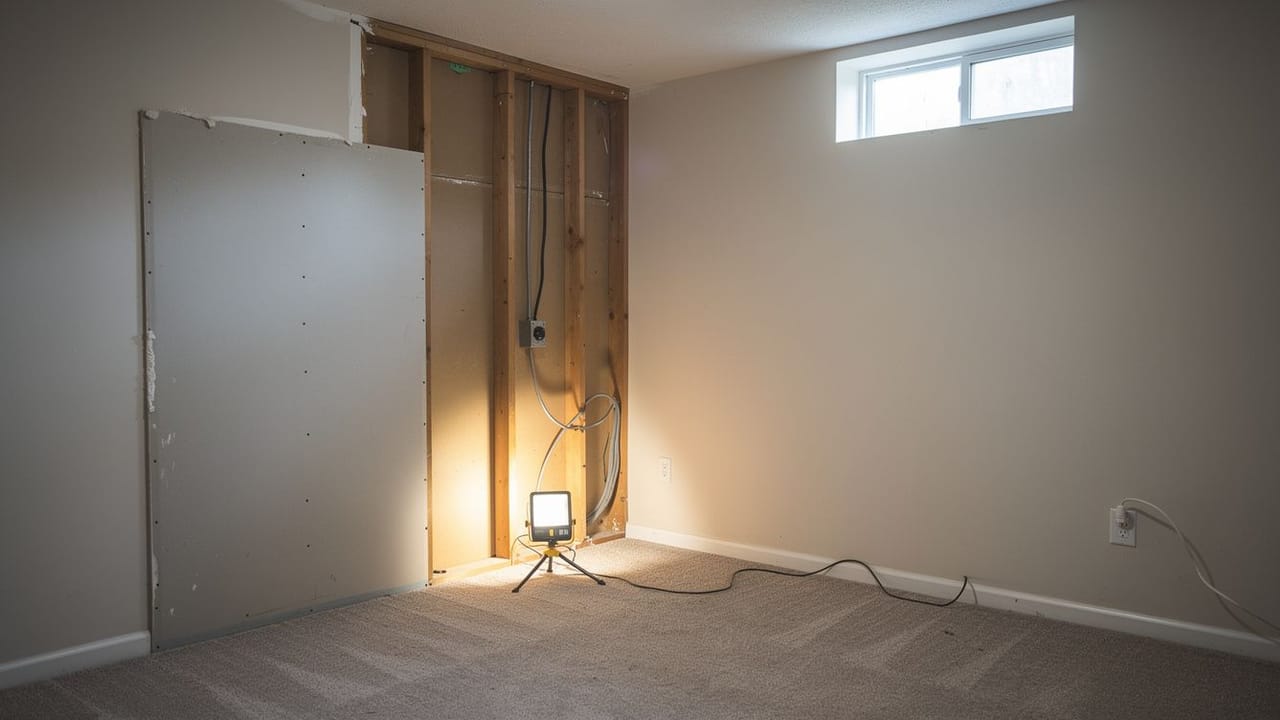
Once the record and the house disagree, the practical path is to find out exactly what was done, then have it opened where an inspector needs to see it, inspected and permitted after the fact as Metro allows. What that takes depends on the house and on what Codes asks for. A bathroom may only need a section of ceiling or wall opened at the drain and the wiring; a finished basement or an attic room can mean more, because framing, wiring, plumbing and insulation all sit behind the same drywall. We look at the job, tell you what we expect an inspector to want to see, pull the permits and make the repairs the inspection turns up. Metro says its permit triggers the required inspections and lets registered contractors pull the trade permits that go with it.
The last step on a permitted renovation is usually Metro’s Use and Occupancy Letter, which Codes describes as allowing you to use the newly renovated home once every required inspection is complete. For a residence it is requested by email. That letter and a closed permit are the paper a buyer’s side can read. If the work is in a kitchen or bath, our kitchen and bath remodeling page covers how we handle those rooms, and you can send us the address and what you know about the work for a written estimate.
Sources
- Tennessee Public Chapter 727 (2018), SB 3069 — The 2018 act setting out the residential property condition disclosure form, including the items on alterations made without permits and not in compliance with codes, and the sales agreement superseding the form on repairs
- Fannie Mae Selling Guide, B4-1.3-05, Improvements Section of the Appraisal Report — Appraiser must comment on the quality, appearance and value impact of an addition without a required permit
- Metro Nashville Codes, Property Permit History — Permit history by parcel through the Parcel Viewer and ePAV
- Metro Nashville Codes, I Want to Renovate a Single-Family Residence — Which renovations need building and trade permits in one- and two-family homes; permits trigger required inspections
- Metro Nashville Codes, Use and Occupancy Letter — The last step of the permit process, requested once all inspections are complete
FAQ
Selling a House With Unpermitted Work in Nashville — questions
Can you sell a house with unpermitted work?
Yes. Unpermitted work does not stop a Tennessee sale, but the state’s disclosure form asks whether any additions, structural changes or repairs were made without necessary permits, and a buyer’s lender may see it in the appraisal. The sales agreement usually decides who fixes what. A real estate attorney or agent can tell you how to handle your own disclosure.
Do I have to disclose unpermitted work when I sell my house in Tennessee?
The state’s disclosure form, set out in Public Chapter 727 of 2018, asks about room additions, structural modifications and other alterations or repairs made without necessary permits, with yes, no or unknown as the answers. How to answer it for your own house is a legal question, so take it to a real estate attorney or your agent.
Will an appraiser report unpermitted work?
On a Fannie Mae loan, yes for additions. The Selling Guide says an appraiser who finds an addition without a required permit has to report on how the work was built and how it looks, and on any effect it has on value. It does not say the loan is refused, but the work ends up described in the report.
How do I look up the permit history on a Nashville house?
Metro Codes points to the Parcel Viewer map for any Davidson County parcel. Search by address, owner or map and parcel number, choose Permit History, then click a permit number to open its scanned documents in ePAV. It shows the work that was filed; anything never filed has to be found by looking at the house itself.
What is a Use and Occupancy letter and do I need one after a remodel?
Metro Codes describes the Use and Occupancy Letter as typically the last step of the permit process, allowing you to use a newly built or renovated home. You apply once every required inspection is complete, and a residential letter is requested by email. With a closed permit, it is the record that the renovation was signed off.
Does a kitchen remodel require a permit in Nashville?
It depends on what changes. Metro’s renovation guide says replacing kitchen cabinets with no electrical or plumbing work needs no permit, and neither does new flooring or paint. Relocating a sink or other plumbing fixture needs a plumbing permit, and moving a fixture, switch or outlet needs an electrical one, as does structural work.