
· by Michael Blair, Nashville's Remodeling
EPA’s page on its Renovation, Repair and Painting Program puts it at roughly three-quarters of U.S. homes built before 1978 that still contain some lead-based paint, so in a house that old we start from the assumption that it is there. Asbestos turns up in older building materials as well. Left intact, both are usually not a problem. Sanding, cutting and demolition are what change that, which is why they come up early in any whole-home remodel of an older house.
Where are lead paint and asbestos found in a house?
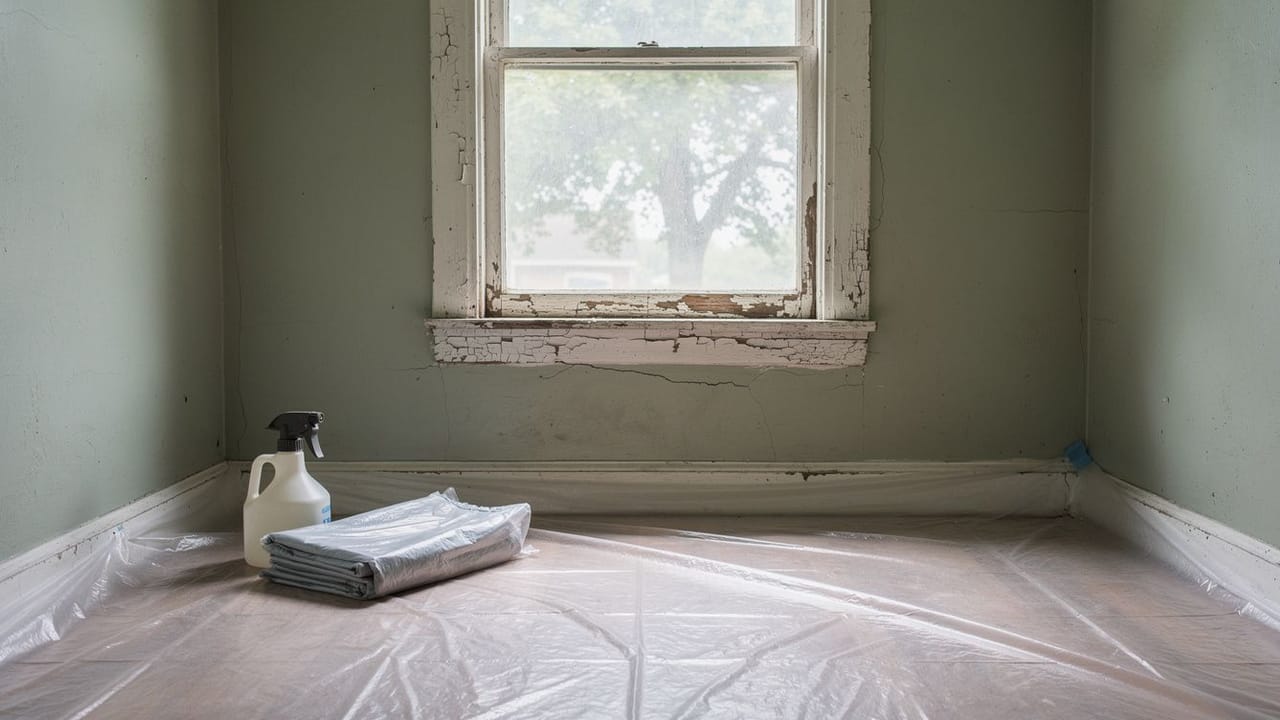
Lead paint can be on any painted surface, inside or out. The wear points are what EPA’s guide to sources of lead singles out: old or worn paint on surfaces that see constant friction, like doors and window sills, can produce chips and dust. A painted sash dragging in its track every time the window opens is exactly that kind of surface.
Asbestos shows up in more places than most people expect. EPA’s overview of asbestos in the home lists vinyl floor tiles, the backing on sheet vinyl and the adhesives under both, textured paint and patching compounds on walls and ceilings, roofing and siding shingles, asbestos cement sheets, and hot water and steam pipes coated or wrapped in it. Vermiculite attic insulation is on that list too, and EPA’s vermiculite page tells homeowners to assume it contains asbestos and not to disturb it. When an old floor is coming up, the tile and its adhesive are the first things worth sampling.
What do the lead rules require of a contractor?
Anyone paid to do work that disturbs paint in housing built before 1978 must be certified in lead-safe work practices, sole proprietors included, under EPA’s RRP rule. Tennessee isn’t among the states that page lists as running their own program, so EPA administers it here. The small-job exemption is narrow. 40 CFR 745.83 treats minor repair and maintenance as disturbing 6 square feet or less of painted surface per room inside, or 20 square feet or less outside, and the exemption is lost the moment the job involves window replacement, demolition of painted surfaces or any of the restricted practices.
Above that line, the work practice standards in 40 CFR 745.85 require the firm to isolate the work area so no dust or debris leaves it, prohibit open-flame burning or torching of painted surfaces, allow a heat gun only below 1,100 degrees Fahrenheit, rule out power sanding or grinding unless the machine has a shroud and a HEPA vacuum attachment, and require cleaning until no dust, debris or residue remains. Before work starts, 40 CFR 745.84 has the firm hand the owner EPA’s pamphlet no more than 60 days ahead and get a written acknowledgment, or a certificate of mailing at least 7 days before.
The homeowner exemption is narrower than people think. EPA says the rule generally does not apply to owners working on their own pre-1978 home, but it does if you rent out all or part of the house, run a childcare center in it, or buy, renovate and sell houses for profit. Either way it is a legal line, and the dust behaves the same whoever makes it, which is why EPA’s lead-safe guidance for DIYers asks for misting before sanding or scraping and frequent HEPA vacuuming. Asbestos sits under different rules: the federal demolition and renovation standards described on EPA’s page for building owners exclude residential buildings with four or fewer dwelling units. If a contractor says nothing about lead-safe practices on a 1940s house, ask to see their EPA RRP certification.
- Assume lead paint in anything built before 1978 until a test says otherwise
- Paid work that disturbs that paint needs an EPA-certified firm
- No torching, no unshrouded power sanding, heat guns only below 1,100 degrees
- Asbestos is identified by a lab sample, not by appearance
- Intact material that will not be disturbed is generally best left alone
Testing, and when it is worth it
For lead, EPA’s page on lead test kits says the agency only recognizes tests done by certified inspectors, risk assessors and RRP-certified renovators, and that a recognized kit in trained hands can reliably show regulated lead paint is not present. The other routes it names are a paint chip sample sent to an accredited lab and X-ray fluorescence testing. A kit you buy and use yourself may tell you something, but it is not a result EPA recognizes.
Asbestos generally can’t be identified by looking at it unless it is labeled. EPA’s asbestos guidance for homeowners says a trained and accredited professional should take the samples for analysis, because sampling done badly can be more hazardous than leaving the material alone. The same page says that if materials are not damaged and will not be disturbed, the house does not need testing at all.
We would rather test before a project than during it. Finding out mid-demolition means stopping a job that is already open, with the room torn up while results come back. Testing only the materials you intend to disturb keeps it proportionate.
The households where this matters most
Young children first. EPA’s overview of lead says it is especially dangerous to children six and under because their brains and nervous systems are more sensitive to it, and EPA’s sources page adds that small children crawl, play on floors and put fingers, toys and other objects in their mouths. Pregnancy is the other case, since lead a pregnant woman is exposed to can affect her developing fetus.
That is the case for containment and for staying out of the work area. EPA’s comparison of abatement and RRP says occupants should not be present in the work area, though an RRP firm is not required to get them out of the house. For a family with young children in a pre-war house, we think moving out for the dusty phase is the most protective option, and it is far easier to build into the schedule at the start than to decide in week three. Our post on living in the house during a renovation covers which projects make staying put unrealistic, and what to expect renovating a pre-war house covers what else turns up behind old walls. When you ask us for a free estimate, tell us the year the house was built.
Sources
- U.S. EPA, Renovation, Repair and Painting Program — About three-quarters of pre-1978 U.S. homes still contain some lead paint; anyone paid to disturb paint in pre-1978 housing must be certified, sole proprietors included; homeowner exemption and its exceptions (renting, childcare, flipping); Tennessee not among the states running their own program
- Code of Federal Regulations, 40 CFR 745.83 Definitions (eCFR, current) — Minor repair and maintenance: 6 sq ft per room inside, 20 sq ft outside; excludes window replacement, demolition of painted surfaces and restricted practices
- Code of Federal Regulations, 40 CFR 745.85 Work practice standards (eCFR, current) — Isolate the work area; no open-flame burning or torching; heat guns below 1,100 F; no high-speed sanding or grinding without a shroud and HEPA attachment; clean until no dust, debris or residue remains
- Code of Federal Regulations, 40 CFR 745.84 Information distribution requirements (eCFR, current) — Pamphlet to the owner no more than 60 days before work; written acknowledgment or a certificate of mailing at least 7 days prior
- U.S. EPA, Protect Your Family from Sources of Lead — Paint in good shape is usually not a problem; friction surfaces such as doors and window sills produce chips and dust; young children crawl, play on floors and put objects in their mouths
- U.S. EPA, Learn about Asbestos — Where asbestos is found in homes: vinyl tile, sheet vinyl backing and adhesives, textured paint and patching compounds, shingles, cement sheets, coated or wrapped hot water and steam pipes, vermiculite insulation
- U.S. EPA, Protect Your Family from Asbestos-Contaminated Vermiculite Insulation — Assume vermiculite insulation contains asbestos and do not disturb it
- U.S. EPA, Lead-Safe Renovations for DIYers — Mist before sanding, scraping, drilling and cutting; frequent HEPA vacuuming; plastic sheeting; N-100 respirator
- U.S. EPA, Information for Owners and Managers of Buildings that Contain Asbestos — Asbestos NESHAP demolition and renovation work practices exclude residential buildings with four or fewer dwelling units
- U.S. EPA, Lead Test Kits — EPA only recognizes tests by certified inspectors, risk assessors and RRP-certified renovators; recognized kits reliable for a negative result; paint chip lab samples and XRF as other options
- U.S. EPA, Protect Your Family from Exposures to Asbestos — Asbestos cannot generally be identified by looking; an accredited professional should sample; undamaged, undisturbed material needs no testing; do not saw, sand, scrape or drill; removal only by an accredited professional
- U.S. EPA, Learn about Lead — Lead is especially dangerous to children six and under, whose brains and nervous systems are more sensitive; exposure in pregnancy can affect the fetus
- U.S. EPA, Lead Abatement versus Lead RRP — Occupants should not be present in the work area; RRP firms are not required to make sure occupants are out of the home
FAQ
Lead Paint and Asbestos in Older Nashville Homes — questions
Do I have to remove lead paint from my house?
No. EPA says lead-based paint in good shape is usually not a problem, and that children can live safely in a house with it as long as the paint and surfaces stay in good condition and are kept clean. Removing it is what makes the dust. The federal rules come into play when paint is disturbed by paid renovation work, and they also reach owners who rent out part of the house, run a childcare center in it, or renovate houses to sell.
Is popcorn ceiling in a Nashville house asbestos?
It may be, and you can’t tell by looking at it. EPA lists textured paint and patching compounds used on walls and ceilings among the materials that can contain asbestos, and it warns against sawing, sanding, scraping or drilling into asbestos-containing material. EPA also recommends that a trained, accredited professional take the sample rather than the homeowner. Have it sampled and analyzed before anyone scrapes the ceiling.
Can I do the work myself in my own home?
For lead, generally yes. EPA says the RRP rule does not usually apply to homeowners working on their own pre-1978 home, but it does if you rent out all or part of it, run a childcare center there, or buy, renovate and sell houses for profit. The dust is the same either way, so EPA’s do-it-yourself guidance still applies: plastic sheeting around the work area, misting before sanding or scraping, frequent HEPA vacuuming and an N-100 respirator. Asbestos removal is different, and EPA says it should be done only by a trained and accredited asbestos professional.
When did houses stop using lead paint?
The federal rules draw the line at 1978, so a house built before then is the one to treat with care. EPA estimates about three-quarters of U.S. homes from before that year still contain some lead-based paint, and anyone paid to disturb painted surfaces in them must be certified in lead-safe work practices.